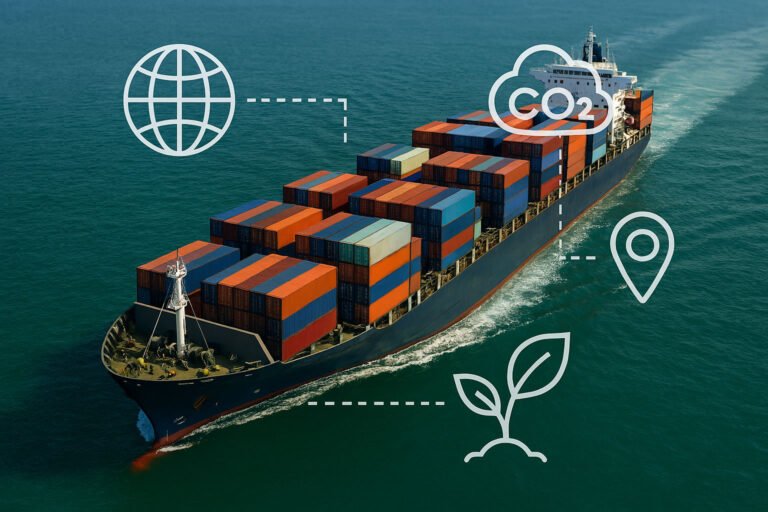
EUDR, CBAM and DPP – where customs meet sustainability
19 March 2026
The EU is already moving decisively toward a regulatory model where sustainability, traceability and product‑level data become conditions of market participation. Three initiatives sit at the centre of this shift: the EU Deforestation Regulation (EUDR), the Carbon Border Adjustment Mechanism (CBAM) and the Digital Product Passport (DPP).
For UK and EU businesses, these are not isolated compliance exercises. They represent a structural change in how supply chains are governed, evidenced and ultimately cleared through customs. They are bringing strategic implications for leaders navigating EU and UK market access. Supply chains must become fully traceable.
EUDR – traceability as a licence to operate
EUDR requires EU operators to demonstrate that key commodities are deforestation‑free, legally produced and traceable to geolocation coordinates. This is a fundamental elevation of due diligence expectations. Compliance requirements have been deferred twice to the end of 2026. The UK’s upcoming Forest Risk Commodities regime is legally established, though the operational start date has not been announced. However, it will be less granular, but divergence means businesses trading into both the UK and EU markets will need to operate two parallel compliance models.
This brings strategic questions for leaders: whether to invest in upstream transparency or accept restricted access to the EU and UK markets.
CBAM – carbon as a border cost
The Carbon Border Adjustment Mechanism (CBAM) is a system that puts a carbon price on certain imported goods. Its rationale is that imported goods should face the same carbon costs as EU (and soon UK) manufacturers, by taxing emissions embedded in the imported goods. The UK and EU aims are to prevent carbon leakage and drive global decarbonisation. The transitional phase for the EU has already required quarterly embedded‑emissions reporting. From February 2027, importers of CBAM goods will be required to purchase CBAM certificates to cover CBAM levies on their 2026 imports.
A UK CBAM is planned for 2027. It will function as a tax aligned with UK ETS carbon pricing. UK and EU methodologies will differ, creating dual reporting obligations for many businesses. At its heart, CBAM fundamentally changes the economics of importing carbon‑intensive goods, because it affects:
- Cost structures (due to certificate/levy obligations)
- Supplier selection (due to the need for emissions data)
- Customs processes (due to requirements of authorisation, reporting, verification)
- Risk and compliance frameworks (due to new penalties, compliance records, audit trails)
Carbon data will become a financial exposure, not just a part of sustainability reporting. Board strategy will need to consider emissions reporting with the same governance discipline as tax and customs declarations.
DPP – data that travels with the product
The EU’s Digital Product Passport (DPP) requirements will embed sustainability, composition and recyclability data into a digital record, accessible across the supply chain. The regime starts in July 2026 with the first legally required DPP in February 2027. It begins with batteries, textiles, electronics and construction products with an extended scope in due course. There is no direct equivalent in the UK yet, although Extended Producer Responsibility (EPR) reforms, more limited to waste packaging, have already moved the UK in a similar direction.
DPP readiness requires robust product master data, structured systems and clear ownership of responsibilities. This may be a challenge where it requires change in areas where many businesses experience under‑investment.
Sustainability meets customs
Although these initiatives are not customs regulations, they interlock with customs processes in ways that will reshape operational workflows and require process alignment:
- EUDR due‑diligence statements must be lodged before customs release
- CBAM reporting is tied to commodity codes and import declarations
- DPP data will feed into the EU Single Window, influencing risk scoring and inspection profiles
Customs compliance teams cannot compensate for missing sustainability data. By implication, compliance must be built upstream; it cannot be retrofitted on the arrival of goods at the EU or UK border.
What does this mean?
End-to-end supply chains must become fully traceable. EUDR and DPP require geolocation, provenance, material composition and chain‑of‑custody data. Compliance costs will rise and become structural as CBAM certificates, EUDR due diligence and DPP data infrastructure create permanent cost layers. Arguably, sustainability and customs functions will converge, since CBAM, EUDR and DPP all sit at the border.
Market access will become conditional on verified sustainability: CBAM ties import costs directly to embedded carbon; the EUDR blocks market access for goods linked to deforestation; while DPP requires granular, product‑level lifecycle data for every regulated item. Supplier risk profiles will inevitably be redrawn because high/embedded‑carbon, non‑traceable goods, or deforestation‑linked suppliers become commercial liabilities.
The strategy work plan
To remain competitive and maintain market‑access, a broad work plan would mean businesses need to focus on:
- End‑to‑end supply chain mapping (including plot‑level data where required)
- Supplier data-capability readiness (ensuring partners can provide emissions, geolocation and product‑level data)
- Investment in digital product data infrastructure (aligned with DPP expectations)
- Integrated governance across sustainability, customs, procurement and product design teams.
- Scenario planning for dual EU/UK regimes (ensuring data accuracy, consistency and integrity, while avoiding duplicated effort.)
- Clear executive ownership for strategic change
For Boards and investors, the shift is a market-access risk, a cost‑of‑doing‑business change and a competitive differentiator for early movers. Sustainability at the border as a prerequisite for international trade will only increase. The change and the challenge are significant; CBAM, EUDR and DPP (and yet to be announced initiatives) are not optional and are not going away.